Friday, February 22, 2013

Nanjing Days and Shanghai Nights

Oct 13th-17th

We arrived to Shanghai at around midday and it was surprising to see the contrast between grey, laid-back Xi'an and hectic, big city Shanghai.

We checked into our centrally located hostel, the decent Blue Mountain on the Bund (www.bmhostel.com) and tried to get our bearings.

We dropped off our stuff and already started exploring. Thinking we were walking towards Shanghai's famed waterway, we walked west until we didn't feel like going any farther. We walked back to our hostel and decided to actually look at a map this time, and realized we had been heading in the wrong direction.

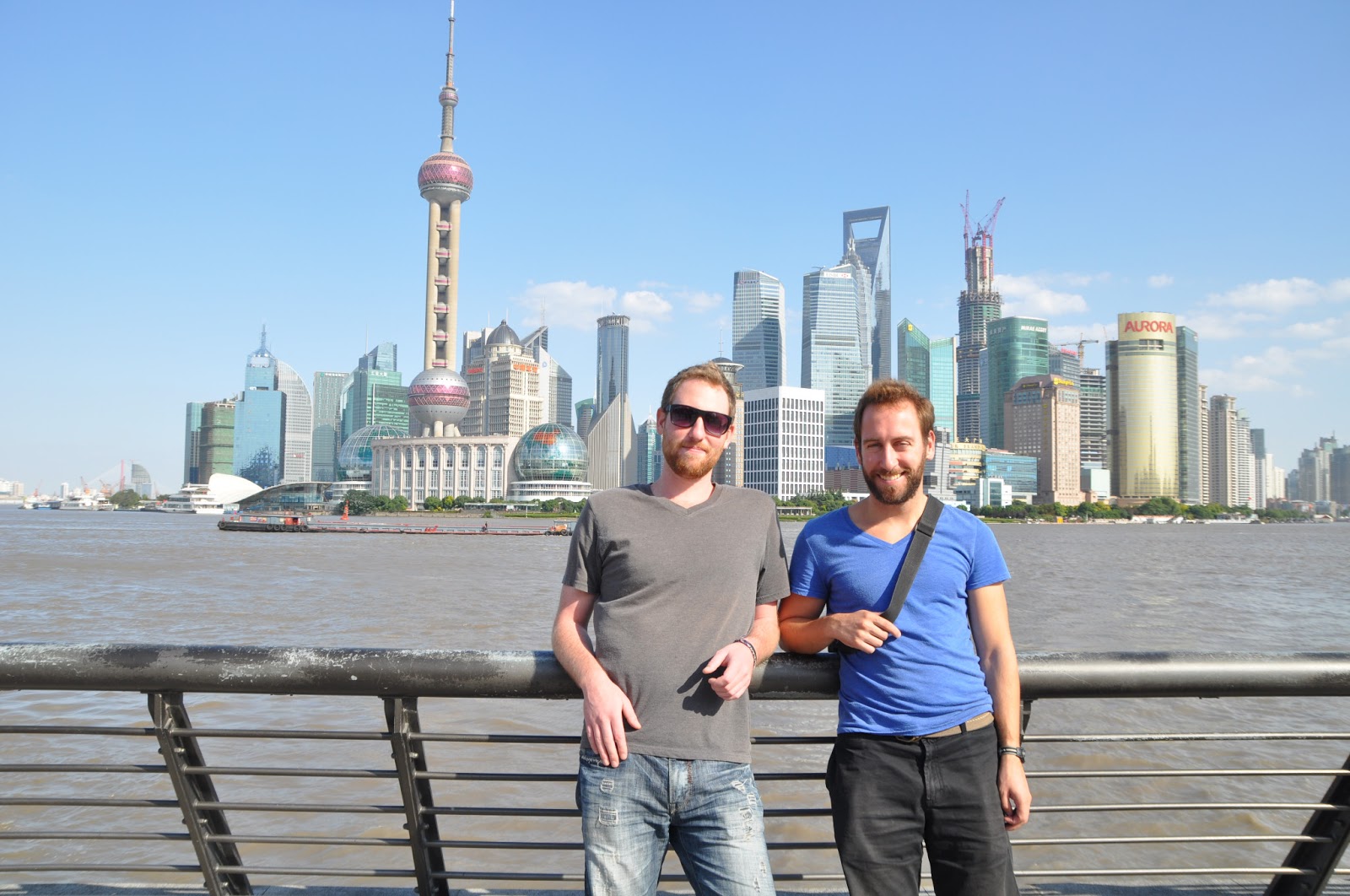
This time we went east and within 10 minutes were face to face with Shanghai's impressive and famous skyline located across the Huangpu river in Shanghai's Pudong district.


After snapping numerous pics of the interesting architecture such as the oriental pearl tower, the spaceship looking tower I thought looked cool, yet Josh found tacky; and the Shanghai world financial center measuring 492m and looking like a giant bottle opener.

On our side of the Huangpu river is Shanghai's famed Bund. The Bund was the city's old wall street and many of its classical buildings were built in the early 1900s by foreign powers such as England, France, the US, Germany and Russia. In the 1920s, Shanghai was called the Paris of the east for its beautiful architecture and cosmopolitan feel.


Once the communists came into power in the late 40s, Shanghai faded into commercial obscurity. The impressive skyscrapers we were looking at across the Huangpu had only been conceptualized and built starting in the 90s, to invigorate the economy and reinstating Shanghai as the economic capital of China.

Shanghai is now the commercial center of China; its most modern and avant-garde city; and its largest with over 18 million residents.


After admiring the contrast between colonial and contemporary, we headed back to the hostel before grabbing a delicious Shanghainese meal and returning to the Bund to admire the impressive skyline at night.


Our hostel was located just off East Nanjing road, the wide pedestrian shopping area with enough lights and people to make Times Square jealous. During our time in Shanghai, I couldn't tell you how many times we walked up and down that street, wondering how it's possible for there to be a Starbucks at every corner and ignoring the countless touts offering watches, purses or sexy lady massages (a known extortion scheme in Shanghai).


Other than our walks down East Nanjing and multiple visits to the Bund, we didn't do too much in Shanghai.

We did walk through People's Square and I took a few hours to wander through Old Town with its quintessential Chinese tea house and architecture, but it was overrun with tourists (as many foreign as local), which made it difficult to navigate the sometimes narrow streets.


On our second night we met Ed, a Brit living in New Zealand who was giving a speech at a conference in a nearby province. He joined us for a walk to Shanghai's French concession. The French concession was the former neighborhood of the French colonial community reflected in its elegant buildings and layout. We tried to find an affordable restaurant in the Xintiandi area, but the European restaurants and Italian and French fashion houses glaring snobbishly at us left us with no satisfying options.

Instead we ate at a fast-food styled Chinese place and bought 50 cent beers while playing a game we thought up called Shanghai Die.

A simple game: one person rolls the die, the others call a number, whoever is the closest to the number called without going over wins. The loser has to drink for the number of seconds their number is off by. If one person guesses correctly, the others have to drink for 5 seconds.

Simple yet effective.

The following evening Fredrika and Camilla arrived to Shanghai following their 38-hour train ride from Chengdu. We went to Captain's bar which offers great views of Pudong at night and has the cheapest drinks anywhere on the Bund. After we played more Shanghai Die, an instant classic.

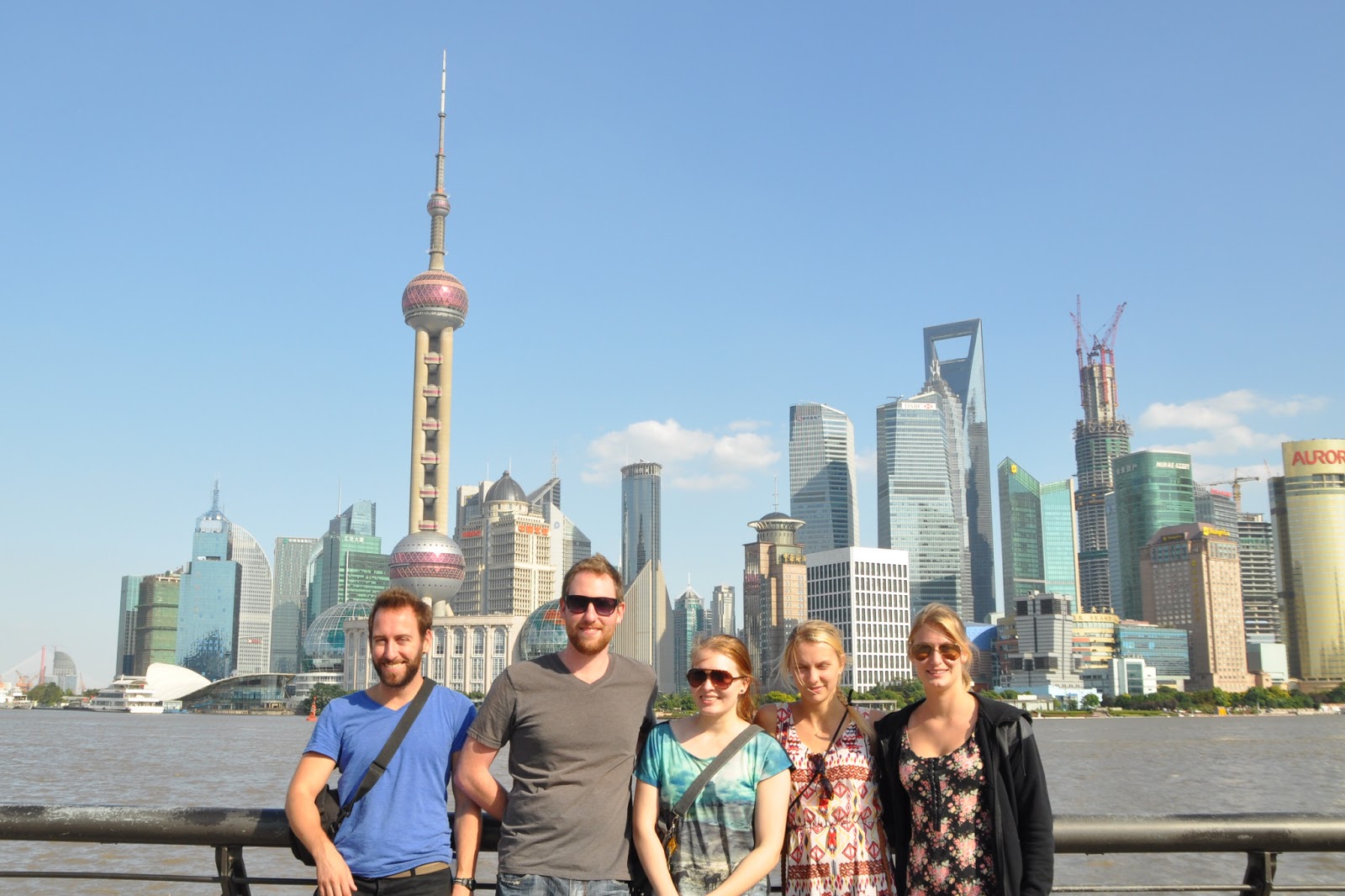
Helinä arrived the next night and we thought it would be nice to go to Pudong to the Ritz Carleton Hotel to get beautiful views of the Bund and the oriental pearl tower. We all dressed in our finest clothes and made our way there. The waiter told us to get a seat on the outside terrace we needed to spend a minimum of 400¥ (66 CAD) each and considering my budget is 50$/day, no view is worth that. Instead we went across the street to the Shangri-la hotel and had a drink on its modest 36th floor, at Jade on the 36th restaurant and lounge.

Feeling aimless we went back to the hostel for a quiet evening. As soon as we got back, a former bartender at the hostel invited us to have drinks with her because it was her birthday. She was already pretty wasted and was happy to pour us shots of vodka.

Before we even had time to settle into our chairs, a German guy told us he was a promoter at a club called Muse and that if we went before 11 we would get in free and drink free all night.

Sounded too good to be true.

It turns out that promoters often recruit foreigners (mainly white people) to enter clubs and drink for free to increase the party vibe. Chinese patrons generally just sit and spend copious amounts of money on premium vodkas and champagne. They use white people to get the dance floor started and to hype the Chinese.

While we weren't explicitly told to do so, we started jumping around and dancing like there was no tomorrow, and as promised, the vodka and tequila flowed all night.

My Gagnam style dance drew rave reviews from our fellow Chinese party-goers.

We slept in past our noon check-out time and then showed Helinä the Bund and walked down East Nanjing one last time. Winnie had arrived in Shanghai and paid us a visit at our hostel an hour before we left for the train station.

Our next stop was Huangshan or the yellow mountains, known as one of the most iconic of all of China's mountains and providing some of the most spectacular scenery China has to offer.

Winnie had told us that like Huashan, there are hundreds of thousands of stairs: my knees said no but my heart said hell's yes!

Wednesday, February 6, 2013

Xi'an Part 2: Murder Mountain and One Last Pagoda

Oct 10th-12th

Huashan, one of Taoism's five sacred mountains had lured us for quite some time. While still in Montreal, Josh had stumbled upon an article about China's Murder Mountain, having been notorious for the amount of deaths that occurred on its steep steps and kilometer cliffs. With some research, we found out it was called Huashan and was not too far from Xi'an. Josh had showed Winnie some pictures and he instantly wanted to join us.


Before we knew it, we were on a bullet train and in 20 minutes we were near the base of Huashan, some 120km away. Man I love that train!

We started our ascent from the village of Huashan, following a 6km path leading up to the north peak. The climb was progressive and only began to get difficult after the first two-thirds. I was a little hesitant having Winnie join us considering he was 59 years old, but he really surprised us and held his own.


Hiking in China, at least sacred mountains implies stairs, hundreds of thousands of steps cut to various heights and widths, finding new ways to wreak havoc on your muscles and knees. Another unfortunate reality when hiking in China is the hundreds to sometimes thousands of people at the summit. Not because they are in amazing shape and into physical activity, but because each mountain has at least one cable-car carrying tourists and tour groups to the summit.


Once we reached the north peak (1615m), it was instantly evident that a cable-car terminated there by the sheer amount of people who greeted us. We quickly left and continued the climb towards the south peak, Huashan's highest at 2160m.


It is quite easy to see why this was once known as murder mountain because of the incredibly steep stairways, near vertical climbs and the then-absent handrails. Today, Huashan is a shadow of its former deadly self, having installed all the safety features necessary to minimize casualties. The only remaining danger I could see was if someone out of the thousands of people ascending or descending at any given time were to fall and start a domino effect down the steep stairs.


What's nice, however, is that most tour groups follow a rather predictable route, and at a pace which is very easy to overtake, leaving us with some breathtaking, unadulterated views of the surrounding landscape.


Before reaching the south peak, we did what we had come to Huashan for: scaling the cliff on three planks of wood.


The cliff that I'm speaking of is over a kilometer in the air and originally consisted of a chain bolted to the rock-face and three planks of wood to scale the cliff to reach a secluded temple.


Today it remains much unchanged except for the line that you attach and detach the mandatory safety-harness to and from as you stare at the distant ground below you.


Even though you are harnessed in, the width of the wooden planks and the fact you are over one kilometer above the ground, separated only by a few one-by-fours is still a bit scary. Also, the passage was obviously made for one pilgrim at a time and the fact that you have to repeatedly pass over or under people going in the opposite direction adds to the perception of danger.


Upon reaching the south peak, we took a break and admired the amazing scenery sprawling around us. From there we started our descent, jelly legs already setting in. We took a brief detour towards the west peak to admire the wedge of rock leading up towards the summit.


We told Winnie to imagine how good that first beer would be once we get back to the hostel and he was instantly a man on a mission. A Bavarian in search of beer? We couldn't keep up!


It was nearly 5pm by the time we had reached the north peak. To save our knees and to make sure we caught the train back to Xi'an, we took the cable car down.

When we got back to the hostel, we were greeted by Helinä, our Finish friend from Sanlitun, who had just arrived from Beijing.

The next day I made my way to the Little Goose Pagoda, a 43m structure built in 707 AD to house the scriptures of Yi Jing.


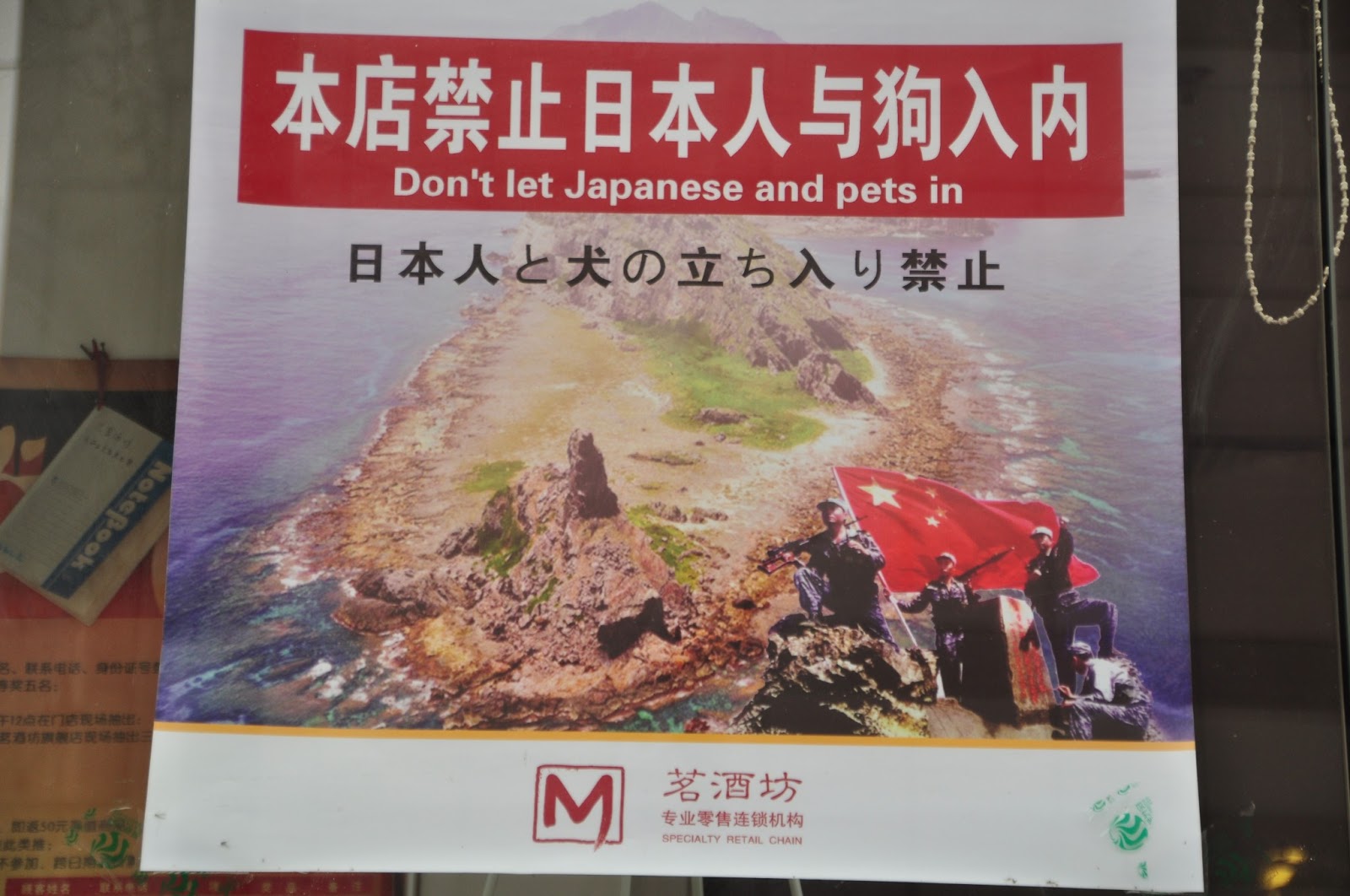
After this brief visit I got lost for around an hour before retracing my steps and just getting on a bus going in the opposite direction. The only consolation I got was seeing this sign that represents the current Sino-Japanese relations due to the disputed islands in the South China Sea.


That evening we wandered through the Muslim quarter until Winnie had to catch his train to do a Yangze river cruise. Helinä, Josh and I continued sampling Chinese Muslim (also known as Hui) specialties like skewered quail eggs, spicy octopus and delicious mutton and beef kabobs.


Josh and I saw some delicious potatoes stewing in chilies and chives and quickly ordered 2 packages. Unfortunately, they turned out to be cubes of fat, which were not as delicious as they originally appeared.


That evening Helinä, Josh and I went to the hostel bar and sampled their many shots including the flaming goose pagoda: essentially a 3-story flaming sambuca shot on steroids. I threw in the towel early, but Josh and Helinä continued to party until early in the morning.

Our final day in Xi'an was spent wandering the back streets in search of some good street food and mentally preparing for our 16-hour train ride to Shanghai. A nice relaxing way to finish off our Xiantastic time in this former imperial capital. Not too bad indeed.

Tuesday, February 5, 2013

Xi'an Part 1: So Much UNESCO

Oct 7th-9th

After getting off our never-ending bus ride, we hailed a cab and were dropped off at our hostel, the great and well-located Shuyuan Youth Hostel (www.hostelxian.com).

The hostel was located just inside the south gate of Xi'an's impressive city wall, spanning over 14km in total length. We climbed the wall and walked along in search of some of Xi'an's former opulence.


Xi'an was the capital of the Qin, Han, Sui and Tang dynasties, when it was known as Cheng'an. It was also the base for administration and governance of the very lucrative silk route through central Asia towards the west, bringing Xi'an immeasurable wealth and power.


Wandering around the wall left little evidence of its former glory: grey polluted air as far as the eye could see, with modern, drab buildings occupying most of the livable space.

We descended the wall and walked east towards the impressive drum tower and central bell tower occupying a round-about reminiscent of a Chinese Arc-de-Triumphe.


As we were nearing the Muslim quarter, we randomly ran into Camilla and Fredrika, the two Swedish girls Josh had uninvited to Jiankou when we were staying at Sanlitun hostel in Beijing. They had already been in Xi'an for a few days and showed us around the Muslim quarter.


From there we took the metro and wandered around in search of Xi'an's famous Da Yan Ta or Great Goose Pagoda. The Great Goose Pagoda was built in 652 during the Tang dynasty to house scriptures of the monk Xuanzang's 15-year journey to India. This impressive, towering structure has remained Xi'an's most recognizable landmark for over a thousand years.


That evening we enjoyed some beers and planned our trip to the neighboring province of Henan to visit the otherworldly Longmen Grottos, a UNESCO world heritage site. As luck would have it, Winnie had just checked into our hostel and would be sleeping in our room. He also decided to join us to the grottos the following day.


To my surprise, everyone was up and ready to leave by 7:15 am. We took a metro to Xi'an's northern train station, where we took a bullet train to Luoyang.

Luoyang is almost 400km away from Xi'an, but the train only took an hour and 20 minutes to get there.

Crazy!


The five of us then hired a little van to take us to the entrance of the site. We spent the next few hours visiting the beyond impressive caves.


The Longmen Caves or Dragon Gate Grottos are one of China's surviving masterpieces of Buddhist rock carving. First started in 494 AD, it took over 200 years to sculpt the more than 100,000 images of Buddha and his disciples.


The caves are spread along the east and west sides of the Yi river and provide undeniable evidence to the level of devotion and artistic ability of the Northern Wei dynasty, who meticulously carved these fantastic caves.


Unfortunately, many of the caves have been vandalized or destroyed at various points in China's tumultuous history.


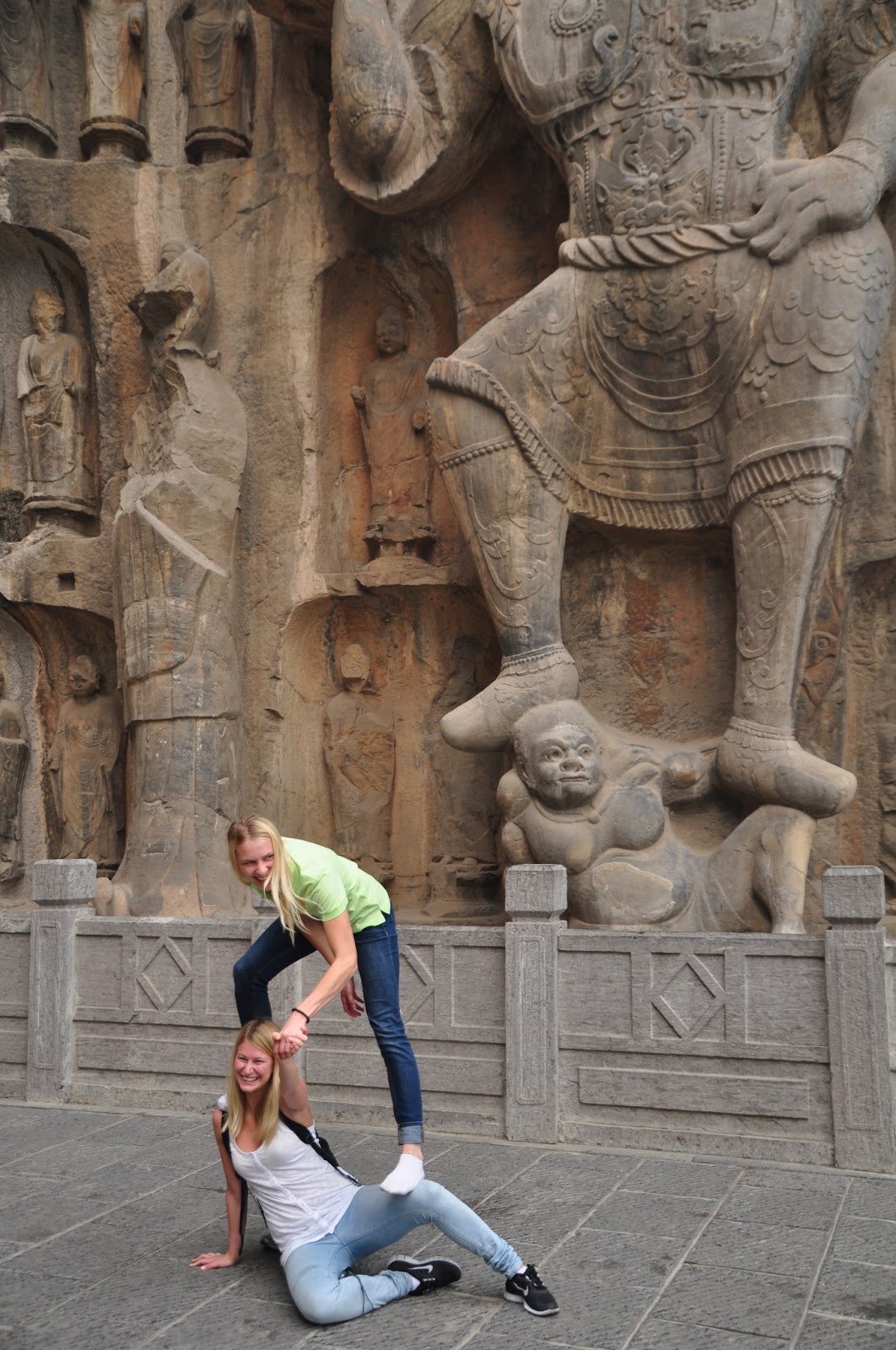
The most impressive and gigantic cave-temple is that of Ancestor Worshipping, whose central 17m seated-Buddha and equally massive Manjusri and Samantabhadra provided many awesome and hilarious photo-ops.


After such impressive caves on the west side, the barren eastern side only warranted a quick glance and visit to an accompanying temple.


Fredrika and Camilla were leaving to Chengdu so we said our goodbyes but knew we would be seeing them again.


The next day, Josh, Winnie, and I, along with a Dutch couple were headed to what Xi'an is most known for and yet another UNESCO world heritage site: the Terra cotta warriors.


We caught local transport pretty easily and made our way to the surprisingly large site. We decided to follow the guide book's suggestions and visit the 3 pits in increasingly impressive order, starting with a somewhat long-winded but still informative movie on Qin Shi Huang, the emperor responsible for the warriors.


From there we went to a museum explaining the grandeur of emperor Qin's funerary complex and showing some significant finds such as the beautiful bronze chariots and horses.


Our introduction to the warriors themselves was with pit 3, housing 68 senior officers in various states of repair and 4 horses staring towards an upward ramp.


We then went to pit 2, which is a much larger room than pit 3, but a majority of the soldiers and horses are still being excavated or remain in pieces. There are, however, several soldiers and horses wonderfully preserved and kept behind glass beside the pit.


We left pit 2 and entered the airplane-hangar-sized pit 1 and were in awe by the thousands of terra cotta warriors standing in rows and in battle formations, all facing east and looking ready for battle.


Thankfully, the pit was large enough that you didn't have to fight your way through constant crowds, although it was a bit of a shame you couldn't get closer to the warriors. Still incredible none-the-less!


That evening I met up with Kim, our couchsurfing host in Beijing, his girlfriend Xinying and his father visiting from Germany. We met at an amazing vegetarian restaurant and I recounted our now hilarious ordeal getting to and from Pingyao.

I had told Xinying that we planned on climbing Mount Huashan the next day even though Josh felt a bit sick (his reason for not joining us for dinner). She said it is difficult enough even when you're healthy. She said that we're crazy and I thought: yeah, sounds about right!